
When you’re looking for a music class for your baby, toddler, or preschooler, there are plenty of options. Some classes feature a charismatic teacher, some center around instruments, some incorporate movement and dancing, and some take place outdoors in a park.
So what makes Tam Tam different?
Our answer is simple:
At Tam Tam, children and grownups don’t just listen to music. They make it together.
That difference is at the heart of everything we do.
Your child isn’t coming to watch a performance
Young children are naturally musical. Long before they can sing a song all the way through or keep a steady beat, they are listening, experimenting with sounds, moving their bodies, and responding to the music around them.
They don’t need to be entertained by a professional performer. They need opportunities to experience music from the inside.
That’s why Tam Tam classes aren’t performances for children to watch.
We sing together. We dance together. We play instruments together. We explore rhythm, melody, tempo, dynamics, and sound together.
And most importantly, grownups participate alongside their children.
Your voice matters. Your movement matters. Your willingness to pick up an instrument and join in matters.
When your child sees you singing and making music, you’re showing them that music is something they can do — not something that belongs to someone else.
Music is learned through immersion
Think about how children learn to talk.
We don’t sit them down for a weekly lesson in vocabulary and expect them to memorize a list of words. They hear language constantly. The people around them talk, listen, repeat, respond, and communicate with them.
Over time, children begin experimenting with sounds themselves.
Music develops in a similar way.
At Tam Tam, we create a rich musical environment where children can hear and participate in music over and over again. Through repetition, exploration, movement, and play, they gradually develop their own musical understanding.
This is why we don’t worry about whether a child is “doing it right.” A baby may simply listen. A toddler may wander around the room while occasionally joining in. A preschooler may sing every word, invent their own movements, or experiment with an instrument. All of those are ways of participating.
There is no audition and no performance pressure.
The grownup isn’t on the sidelines
One of the most important things that distinguishes Tam Tam is our belief that grownup participation is part of the curriculum.
Your child isn’t simply attending a class while you observe.
You are their musical model.
When you sing—even if you don’t consider yourself a singer—your child hears your voice and sees you enjoying music. When you move to the beat, they see that music belongs in the body. When you play an instrument, they see you experimenting and making sounds.
And when you make music together, something else happens, too:
You connect.
For many families, the weekly music class becomes a special time when they can put aside the rush of the day and simply be together.
Real voices. Real instruments. Real participation.
We intentionally keep our classes centered on live music.
You won’t find microphones at Tam Tam. That’s because we want children to hear the voices of the people who matter most in their lives — their grownups and their teacher — not a polished professional performance amplified through a sound system.
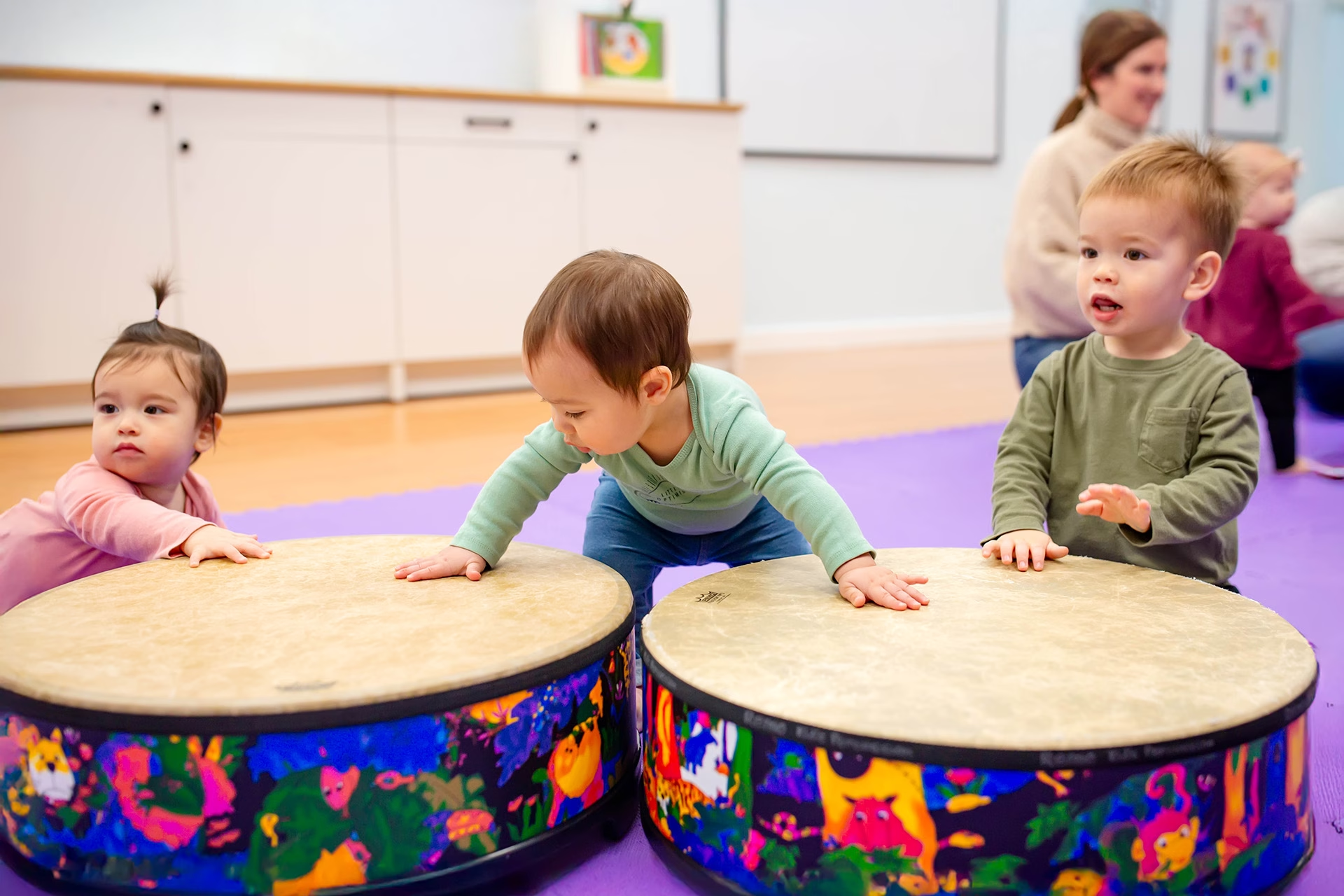
We use real instruments, including drums, shakers, sticks, bells, and other percussion instruments, as well as our voices and bodies.
Children don’t have to wait until they’re “old enough” to play music.
They can start now.
Why we love an indoor musical environment
We love being outside, too, and sometimes we take our music outdoors. But our regular classes are designed to create an environment where everyone can hear and respond to one another.
Young children are still developing their ability to listen and focus on sound.
Inside, we can create a shared musical space where your child’s voice, your singing, the teacher’s voice, and the sounds of the instruments are all part of the experience.
There is less competing noise and more opportunity to listen closely, to each other and to the music.
Music is about connection, not perfection
You don’t need to be a “musical family” to come to Tam Tam.
You don’t need to know how to play an instrument.
You don’t need to have a beautiful singing voice.
You don’t need to know all the words.
And your child doesn’t need to sit still or follow every direction.
What matters is that you’re willing to join in.
Because our goal isn’t to produce little performers.
It’s to help children discover that music is something they already have inside them—and something they can share with the people around them.
More than an activity
A weekly music class can certainly be a wonderful enrichment activity. But we believe it can be something more.
It can be a place where babies hear familiar voices and sounds.
Where toddlers discover that shaking a shaker can become music.
Where preschoolers learn to listen to one another and contribute their own ideas.
Where grownups get to sing and move alongside their children.
Where families see the same friends every week.
Where music becomes a shared experience rather than something we consume.
Music isn’t just entertainment. It’s a way of connecting.
Our approach in one sentence
If we had to describe the Tam Tam difference in just one sentence, it would be this:
Tam Tam is a research-based music experience where children and grownups make music together through live singing, movement, instruments, and playful exploration — not a performance that children simply watch.
That’s why we do what we do.
Because we believe every child is born musical.
And making music together is one of the simplest, most joyful ways for children and grownups to connect.
Come make music with us
Tam Tam offers music classes for babies, toddlers, preschoolers, and their grownups in Brooklyn, as well as music programs for schools.
If you’re looking for a music class where your child can participate fully, and where YOU get to be part of the experience, too, we’d love to sing, dance, and make music with you.